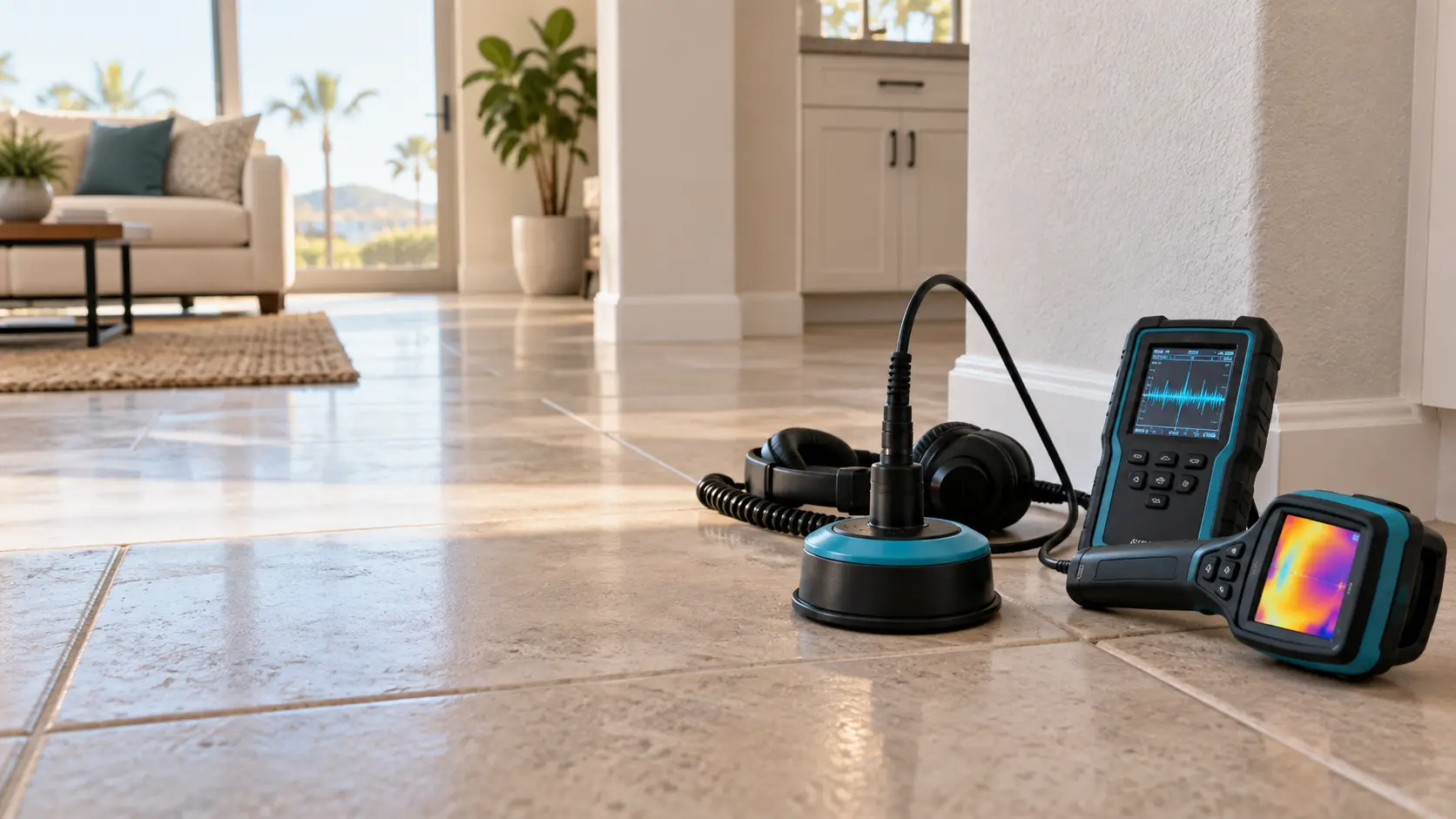
Slab leak detection
Narrow down a suspected hot- or cold-water line leak beneath a concrete slab before choosing where to open the floor.
Explore slab leak detectionMatch the investigation to the suspected water line or current urgency. If the source is unclear, start with the symptom and let testing narrow the category.
Each page owns a distinct leak context. Emergency detection covers urgent conditions; it is not another pipe-location category.
Mira Mesa / 92126 is the primary service focus; nearby 92121 and 92129 requests are confirmed individually. Check service coverage.
Narrow down a suspected hot- or cold-water line leak beneath a concrete slab before choosing where to open the floor.
Explore slab leak detectionInvestigate water loss or moisture concealed behind walls, above ceilings, below floors, or inside building cavities.
Explore hidden leak detectionTrace a suspected water-service or buried supply-line leak between the meter, home, and outdoor branches.
Explore underground leak detectionLocate a small leak in copper supply piping when the visible drip, wall stain, or meter behavior does not show the exact source.
Explore pinhole leak detectionGet a focused response when water is active, moisture is spreading, or meter flow suggests a significant concealed leak.
Explore urgent leak guidanceA warm floor, damp ceiling, moving meter, or wet yard can each have more than one cause. Choose the closest starting point.
“Water line leak” describes the system, not a separate destination. The useful question is where the suspected line runs.
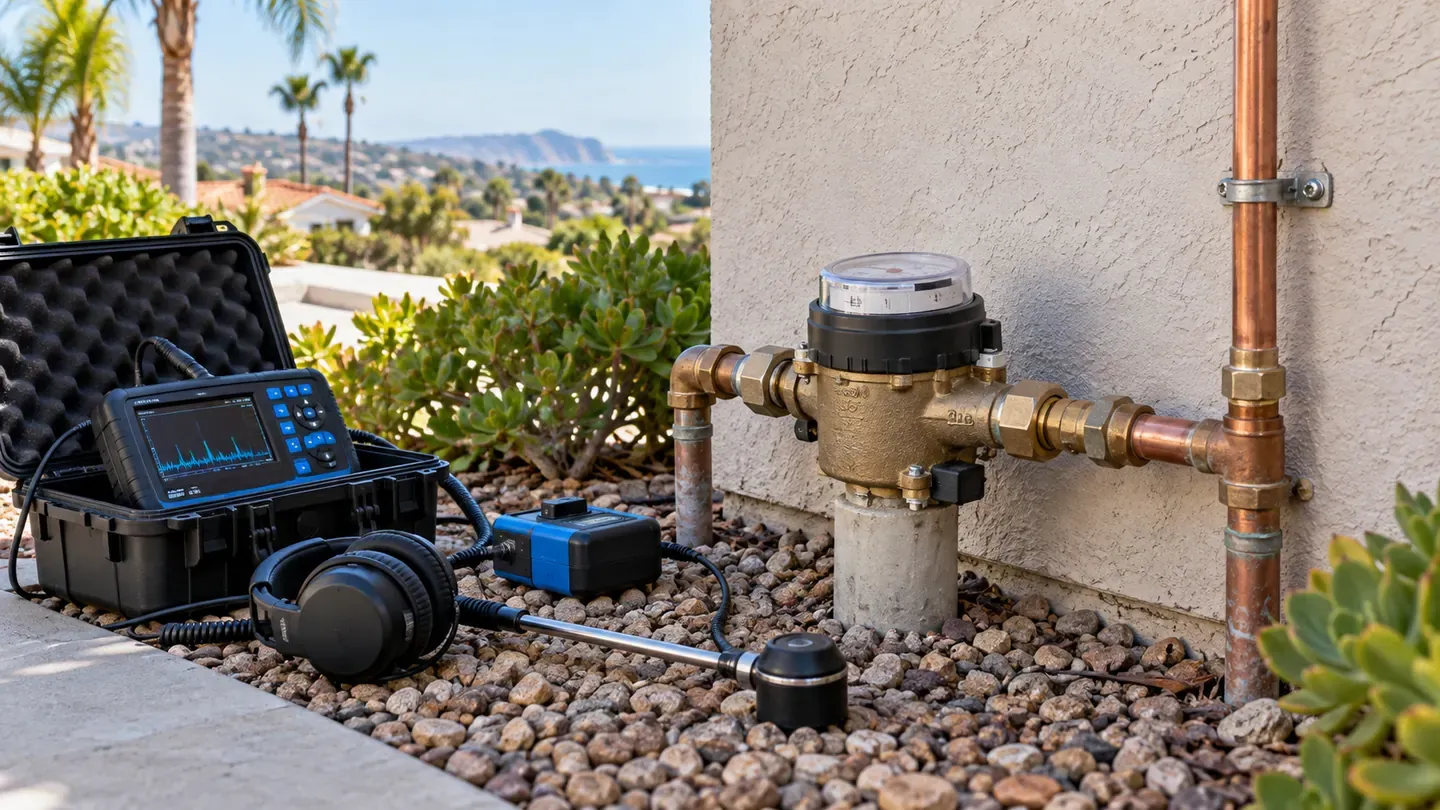
The hidden water leak page covers concealed interior supply lines and investigations behind walls, above ceilings, behind drywall, and in cabinet areas. These are subtopics of one service, not separate locations or URLs.
Compare moisture movement, accessible fixtures, pressure behavior, and the likely pipe route before opening a wall.
Test supply plumbing against drain, roof, window, and condensation possibilities when a stain appears away from its source.
Isolate the relevant branch and compare readings where pressurized piping runs through interior cavities.
Check visible connections and appliance discharge before assuming moisture came from a concealed line.
Use the appointment preparation guide to organize symptoms, access, and questions about the visit. If a source has already been narrowed, review the repair and restoration handoff.
Detection can reduce blind opening, but the precision depends on pipe material, depth, access, background noise, and whether a leak is active during testing. Compare diagnostic methods and their limits.
A concealed wall check and a buried-line investigation require different work. The cost guide explains the variables and questions to ask before agreeing to a scope. For quick questions about cost and next steps, use the leak detection FAQ.
Describe the property, symptom, and meter behavior. Call or request a callback to discuss the most useful starting path.